Crown Thinning in Barbican: Expert Tree Work for Homes, Estates and Businesses
Why crown thinning matters for Barbican properties

If you are looking for crown thinning in Barbican, you are probably dealing with a tree that is healthy but becoming a little too dominant for its surroundings. In a place like Barbican, where buildings, courtyards, communal gardens, office courtyards and tight access routes can sit close together, the way a tree is managed can make a real difference to light, safety and day-to-day use of the space. Crown thinning is often the right option when you want to reduce the density of the canopy without changing the tree’s natural shape too drastically.
Unlike heavy cutting or drastic height reduction, crown thinning focuses on selectively removing smaller secondary branches across the canopy. The goal is to let more light and air through, lower wind resistance, and reduce the weight in the crown while keeping the tree visually balanced. For local homeowners, managing agents, landlords and business premises in Barbican, this can be a practical way to keep trees attractive while making outdoor areas easier to use.
That balance is especially important in central London locations. Trees in Barbican may sit near paved paths, internal courtyards, balconies, basement lightwells, roof terraces, shared access roads or landscaped planting schemes. A well-planned thinning service helps maintain the tree while addressing the realities of the site. Request a free quote if you want a local team to assess whether crown thinning is the best approach for your tree.
What crown thinning is, and what it is not
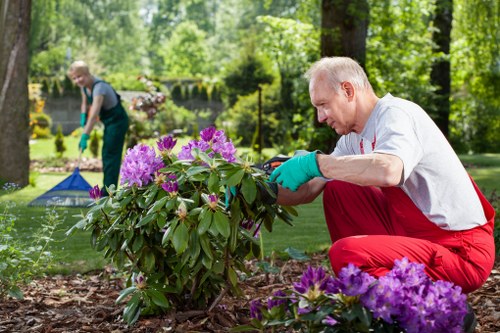
Crown thinning is a precise arboricultural technique. It does not mean stripping out large limbs or leaving the tree looking sparse. Instead, an experienced tree surgeon removes selected branches from throughout the canopy, usually taking out dead, weak, crossing or overcrowded growth. The result is a tree that still looks natural but allows more daylight, airflow and reduced sail effect.
For many customers in Barbican, this is a much better option than over-pruning. In tightly built areas, some trees can begin to block windows, shade communal spaces, brush against structures or catch more wind than they should. Thinning can help reduce those issues while preserving the tree’s structure and character. It is often used for mature ornamental trees, broadleaf species and trees growing in managed landscapes.
It is important to distinguish crown thinning from crown reduction and crown lifting. Each has a different purpose. Crown lifting raises the canopy to improve clearance underneath. Crown reduction lowers the overall size of the crown. Thinning is about internal spacing within the crown itself. In practice, a tree may need one or more of these techniques, but the right choice should depend on the species, the tree’s health and the location.
Why local tree care is particularly useful in Barbican
Working with the space, not against it
Barbican has a distinctive mix of residential towers, apartments, walkways, landscaped terraces and commercial properties. Trees here often contribute a lot to the feel of the area, but they also need careful management because space is limited and many sites have specific access conditions. A local team familiar with Barbican-style environments can plan the work around those challenges, whether the tree is in a private courtyard, near a shared entrance or in a managed garden area.
Access can be a major factor. Some properties have restricted parking, narrow service routes, controlled entry points or limited space for equipment. A good local tree service will factor that in from the beginning and choose methods that suit the site. That can mean careful hand dismantling, structured waste removal, or working with residents and building managers to reduce disruption. Local knowledge matters because it helps the work run smoothly and safely.
Barbican customers also tend to care about how the work will affect light levels and the overall appearance of the setting. In densely built surroundings, even a modest increase in daylight can improve a courtyard, make a balcony feel larger or help plants below the tree perform better. Crown thinning is often requested for this reason, especially where trees are mature and have developed thick inner growth over time.
Signs your tree may need crown thinning
Common reasons customers enquire
Many people first notice the need for thinning when the tree starts to feel heavier or more enclosed than it used to. The canopy may be dense enough to block much of the light, or the branches may sway more than expected in strong winds. In some cases, the tree may not be in poor health at all; it simply needs better spacing within the crown to suit its surroundings.
Typical signs include:
- Reduced daylight entering homes, offices or shared spaces
- Heavy, crowded foliage that creates a dense canopy
- Crossing, rubbing or awkwardly positioned branches
- Increased wind load or movement in exposed positions
- Branches encroaching on paths, windows, roofs or balconies
- Blocked views or an overbearing tree shape in a small garden or courtyard
In Barbican, customers often contact a tree surgeon for thinning when a tree has matured into a space where it was once perfectly fine but now feels too substantial. That can happen in gardens that have developed around the tree, in communal landscaping where surrounding shrubs have been added, or where nearby structures now make the canopy feel close and enclosed. Book your service now if you are unsure whether the tree is simply growing naturally or has become too dense for the site.
What is included in a crown thinning service
A careful, selective approach
A professional crown thinning service should always begin with an assessment of the tree, its species, condition and setting. The work is then planned to suit the structure of the canopy and the purpose of the thinning. The aim is not just to make the tree lighter, but to do so in a way that supports its long-term health and appearance. This is especially important in Barbican, where trees are often part of a carefully maintained landscape.
Depending on the tree and site, the service may include:
- Selective removal of small secondary branches throughout the crown
- Removal of dead, diseased, weak or damaged growth where appropriate
- Reducing crossing and congested branches
- Maintaining the tree’s natural outline and balance
- Clearing debris from the work area on completion
- Loading and removing green waste from site, where agreed
- Advice on whether further tree care may be helpful later
Attention to detail is essential. Good thinning should be difficult to spot as a drastic change, even though the results are noticeable in terms of light and airflow. If the work is carried out properly, the tree will still look like the same tree — just better suited to its surroundings.
Benefits of crown thinning for local customers
Practical, visual and environmental advantages
People choose crown thinning for different reasons, but the benefits often overlap. For residential customers, the main appeal is usually a better balance between tree cover and daylight. For commercial premises, the concern may be maintaining a neat, professional appearance while keeping outdoor areas usable for staff, visitors or residents.
Some of the main benefits include:
- More natural light reaching windows, gardens and communal areas
- Better airflow through the canopy, which can help the tree in windy locations
- Reduced weight in the crown, helping the tree cope more comfortably with weather
- A tidier, more open appearance without removing the tree’s character
- Less likelihood of branches rubbing or crowding each other
- Improved amenity value in landscaped spaces
For customers in Barbican, these benefits can be particularly noticeable in apartment settings, shared courtyards and business environments where a tree can affect many people at once. A lighter canopy may also make it easier to enjoy planted areas below, especially if the tree is competing with smaller shrubs or seasonal planting. In the right hands, thinning is about improving the whole space, not just the tree.
How crown thinning works on site
Step-by-step service process

Every tree and site is different, but a professional crown thinning job usually follows a sensible process. This helps keep the work safe, efficient and tailored to what the customer actually needs. In Barbican, where access and shared surroundings can complicate things, planning matters just as much as the cutting itself.
A typical process includes:
- Initial inspection of the tree, canopy, access and surrounding structures
- Discussion of what you want to achieve, such as more light, reduced density or improved clearance
- Agreement on the most suitable extent of thinning for the species and condition
- Careful sectional pruning using appropriate arboricultural methods
- Checking the final balance and appearance of the tree
- Clearing the site and removing waste as agreed
Good thinning is not rushed. Branches are chosen deliberately, and the work is carried out to keep the tree stable and attractive. That is one reason local customers prefer to use a dedicated tree care team rather than a general contractor. The difference is in the judgement.
Residential crown thinning in Barbican
For balconies, courtyards, gardens and terraces
Homeowners and leaseholders often ask for crown thinning when a tree begins to shade living spaces too heavily. In Barbican, that can mean windows that have become gloomy, balconies that feel enclosed or private gardens that no longer get enough daylight for comfortable use. Thinning can make these areas feel more open without removing the presence of the tree itself.
This type of tree work is especially valuable in properties where space is at a premium. A dense canopy over a small courtyard can make the whole area feel much smaller than it is. By selectively opening the crown, you may notice better light in the morning or afternoon, less wind resistance and a more pleasant view from inside the home. For residents, that can be a simple change with a noticeable day-to-day impact.
It is also common for trees near homes to need balancing around roofs, satellite equipment, gutters or upper-floor windows. In those cases, thinning can reduce contact and improve clearance while keeping the tree’s overall form intact. If you are preparing for a property sale, planning exterior improvements or simply want your home to feel brighter, contact us today to discuss whether crown thinning is the right option.
Commercial and managed-property tree care
Suitable for offices, estates and shared environments
Barbican also has a strong commercial and managed-property presence, and trees in these settings often need regular, sensible maintenance. Office courtyards, forecourts, retail-adjacent planting, managed residential estates and communal open spaces all benefit from tree work that supports both appearance and safety. Crown thinning can be a practical way to improve the experience of the site without making the landscape look overworked.
For building managers and facilities teams, the service can help with:
- Improving visibility and light around entrances and pathways
- Reducing wind pressure on large crowns in exposed areas
- Maintaining a tidy, well-kept external environment
- Minimising conflicts between tree growth and nearby structures
- Supporting an ongoing landscape maintenance plan
Because these sites may involve residents, tenants, security arrangements or business operations, timing and communication are important. A local team used to working in Barbican will understand the need for efficient scheduling and respectful site management. That can make the whole experience easier for everyone involved.
How to prepare for your crown thinning appointment
Simple steps that help the work run smoothly
Preparation does not need to be complicated, but a few small steps can make a big difference on the day. If the tree is in a shared or restricted area, clear access can help the team work more efficiently and keep disruption down. In a place like Barbican, where entrances, service routes and parking can be tightly controlled, a little planning goes a long way.
Helpful preparation includes:
- Check whether the tree is in a private, shared or managed area
- Make sure access points are available when agreed
- Move vehicles, garden furniture or fragile items if requested
- Inform neighbours, residents or building management if needed
- Point out any known concerns, such as cables, fragile planting or stored items nearby
It is also useful to let the team know what outcome matters most to you. Some customers mainly want more light. Others want a more balanced crown, better clearance or reduced encroachment. Clear priorities help the arborist shape the work appropriately.
What affects the cost of crown thinning?
Pricing factors explained clearly
Many customers want to know what determines the cost of crown thinning in Barbican. While exact prices depend on the specific tree and site, the main factors are usually straightforward. A quote should reflect the time, equipment, access needs and complexity of the work rather than relying on a one-size-fits-all figure.
Factors that commonly influence pricing include:
- Tree size and species
- How dense the canopy is
- Whether the tree is easy or difficult to access
- Proximity to buildings, roads, parked vehicles or utilities
- Waste removal requirements
- Any need for traffic or pedestrian management
- Urgency or preferred scheduling
In Barbican, access can have a big impact on the work needed. A tree in an open garden may be simpler to thin than one tucked between buildings or inside a managed courtyard with limited loading space. That is why site assessment is so important. A good local company will explain what is involved and provide a quote based on the actual job, not guesswork.
Why choose a local company for tree thinning in Barbican
Local knowledge, practical planning and better site fit
Choosing a local service for crown thinning in Barbican offers several practical advantages. First, the team is more likely to understand the kind of access issues, building layouts and shared-space arrangements common in the area. Second, they are better placed to schedule the work with the realities of central London movement in mind. Third, they can respond with the right equipment and waste handling approach for the site.
Local tree care is also valuable because it helps ensure the work suits the surroundings. Barbican has a mix of mature landscaping and modern architecture, so tree work should be done with an eye on both aesthetics and function. A team that knows the area will appreciate how important light, appearance and minimal disruption can be to residents and occupiers.
For many customers, that means less hassle and a more reassuring experience from the first enquiry through to completion. If you need advice on whether a tree should be thinned, reduced or simply monitored, a local arborist can explain the options in plain English and help you make a sensible decision. Request a free quote when you are ready to move forward.
Areas covered around Barbican
Nearby locations and common property types
Customers asking about crown thinning in Barbican often also need work in nearby parts of central London. Local tree services commonly assist in surrounding areas where access, building density and mixed property use create similar challenges. That might include nearby residential streets, business districts, estate courtyards or communal developments just beyond Barbican itself.
Typical nearby service contexts may include:
- Apartment blocks and managed residential complexes
- Private courtyards and garden spaces
- Commercial offices and mixed-use buildings
- Landscaped communal grounds
- Townhouse gardens and roof-level planting areas
Because tree work in central London can be affected by narrow access, parking limitations and the need to keep neighbours informed, it is useful to work with a team that already understands local conditions. The closer the service is to the site, the easier it is to arrange practical, efficient tree care.
Frequently asked questions
Common questions from local customers
Is crown thinning suitable for every tree?
Not always. Some species respond well to thinning, while others need different forms of management. A site assessment is the best way to decide whether it is suitable for your tree.
Will the tree look bare afterwards?
Proper thinning should not leave the tree looking stripped. The aim is to reduce density while keeping a natural shape and attractive appearance.
Does thinning help with wind?
Yes, it can reduce wind resistance by allowing air to pass more easily through the canopy. That can be useful for trees in exposed or elevated positions.
Can crown thinning improve light to my flat or garden?
Usually, yes. One of the main reasons people request this work in Barbican is to increase daylight without removing the tree.
How often should a tree be thinned?
That depends on the species, growth rate, site conditions and how the tree is used. Some trees may only need occasional attention, while others benefit from regular monitoring.
What if the tree is near a building or communal area?
That is very common in Barbican. A professional team will plan the work carefully to protect nearby structures and keep disruption low.
Do I need permission before the work starts?
Some trees may be protected or subject to local controls, and managed properties may have their own approval steps. It is sensible to check before any work takes place.
Book crown thinning in Barbican with confidence
Clear advice, careful work and a local approach
If your tree is healthy but too dense for its setting, crown thinning may be exactly the solution you need. It can improve light, help manage wind, preserve the tree’s shape and make outdoor spaces more pleasant to use. In a location like Barbican, where trees often sit close to buildings and shared spaces, the value of careful, knowledgeable pruning is hard to overstate.
Whether you manage a residential block, care for a private garden or need work carried out around a business premises, it is worth choosing a team that understands the pressures of local access, the importance of tidy results and the need to respect the surrounding environment. A well-executed thinning job should feel considered, not intrusive.
If you are comparing options or want to know whether crown thinning is better than reduction or lifting, speak to a local arborist and ask for a site assessment. Contact us today to discuss your tree, your location and the outcome you want. Book your service now if you are ready to take the next step and improve your Barbican property with expert tree care.