Storm damaged tree removal in Barbican
When a storm hits Barbican, tree damage can become a serious problem very quickly. Heavy rain, strong winds, saturated ground, and falling debris can leave trees leaning, cracked, uprooted, or hanging dangerously over homes, pavements, gardens, vehicles, and commercial premises. If you need storm damaged tree removal in Barbican, a prompt and carefully planned response can make all the difference to safety, access, and peace of mind.
Whether the problem involves a mature tree in a private courtyard, a split stem near a residential block, or storm fallout affecting a shopfront, office entrance, or managed estate, the right team can assess the risk, remove unstable material, and help restore safe conditions. Barbican has a distinctive mix of homes, commercial spaces, and pedestrian-heavy routes, so storm-related tree work often needs a thoughtful approach that respects access limits, public safety, and surrounding structures.
From emergency callouts to scheduled removal after the weather has settled, local customers often want the same things: a fast response, clear communication, minimal disruption, and work carried out safely by experienced tree specialists. Storm-damaged tree removal is rarely a simple cut-down job. It can involve careful dismantling, sectional lowering, traffic and pedestrian management, stump and debris handling, and close attention to the condition of nearby trees and property.
Why storm-damaged trees in Barbican need quick attention

Storm damage can turn an otherwise healthy tree into an immediate hazard. Even when a tree is still standing, internal fractures, split branches, disturbed roots, and hidden structural weakness can make it unsafe. In a dense area such as Barbican, where buildings, walkways, planted spaces, and service access can be close together, the consequences of delay can be significant.
Some trees show obvious damage after a storm, such as a major limb on the ground or a trunk leaning sharply away from its original position. Others look stable from a distance but have suffered root failure, crown imbalance, or cracks that only become apparent on close inspection. That is why many local customers request a professional assessment before deciding whether the tree can be retained, reduced, or must be removed.
Safety is the priority. If a tree has become unstable, the area around it may need to be cordoned off until the work is complete. This can be especially important in shared courtyards, loading areas, access roads, or near footpaths used by residents, staff, and visitors. A local team familiar with Barbican conditions can plan the work around the real-world constraints that matter most.
Common storm damage scenarios we deal with
Storm damage takes many forms, and every situation needs its own approach. In Barbican, local tree removal work often involves a mixture of residential and commercial sites, mature ornamental planting, and trees growing in constrained spaces. The most common situations include broken branches, split trunks, uprooted trees, and trees that have moved dangerously after high winds.
Some trees can be made safe through pruning or selective reduction, but others are too compromised to keep. Where the trunk, roots, or major scaffold limbs have failed, removal is usually the safest long-term option. A thorough inspection helps determine whether the tree can be retained or whether removal is the right call. In storm situations, there is often little time to wait if a tree is blocking access or threatening a structure.
There are also cases where the tree itself is not fully fallen, but it has pulled up paving, damaged fencing, strained retaining elements, or shifted soil around the base. In those situations, the risk may continue to increase after the storm has passed, especially if more rain is expected. Professional storm damaged tree removal in Barbican is about dealing with the visible problem and the hidden hazards beneath it.
What our storm damaged tree removal service includes
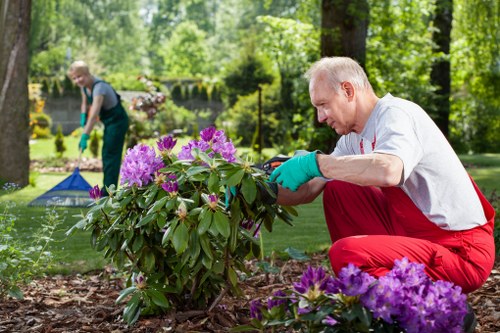
Customers usually want to know what happens once help arrives. A proper service is more than simply cutting down a dangerous tree. It should include assessment, planning, safe dismantling, removal of timber and brush, and leaving the site in a tidy and usable condition where possible.
Typical tasks can include:
- Initial inspection of the damaged tree and surrounding area
- Risk assessment for nearby buildings, people, vehicles, and services
- Sectional dismantling of unstable limbs or stems
- Controlled lowering of large pieces where space is limited
- Removal of fallen material from gardens, roofs, driveways, or access routes
- Processing and clearance of branches, trunk sections, and debris
- Advice on whether further pruning, bracing, or replacement planting may be needed
In some cases, the service may also include stump grinding or the reduction of remaining stubs to a safe height. If roots have lifted, the ground may be left uneven and should be approached carefully. A local team will also consider whether the storm has affected nearby trees, because one failed tree can sometimes indicate broader issues across a site.
Every property is different. A courtyard tree may need rope-and-harness dismantling, while a larger open-site tree may be handled with more direct access. The right method depends on the tree species, the extent of the damage, and how much room is available for equipment and removal vehicles.
Why local knowledge matters in Barbican
Barbican is not the kind of place where a one-size-fits-all approach works well. Access can be tight, parking can be limited, and many properties sit within complex layouts where pedestrians, residents, service vehicles, and businesses all need to keep moving. That means a storm damage response must be planned carefully, not rushed.
A local team used to working in and around Barbican understands the practical pressures of the area. That may include working near residential blocks, shared gardens, office entrances, retail spaces, managed estates, or quieter side streets where loading and unloading must be handled with care. It also means taking account of nearby areas such as Moorgate, St Paul's, Farringdon, City of London, and Clerkenwell, where similar access challenges and property types are common.
Local knowledge helps with timing, logistics, and safety. For example, a job may need to avoid busy pedestrian periods, coordinate with building management, or use smaller equipment because larger vehicles would be difficult to position. In dense urban settings, these details can matter as much as the tree work itself.
Residential customers: homes, courtyards, and shared gardens

Homeowners, landlords, and managing agents in Barbican often contact a tree removal service after a storm when a tree is leaning over a roof, blocking a balcony, or shedding broken branches into a shared space. In residential settings, the priority is usually to make the area safe without causing avoidable disturbance to neighbours or damaging hard landscaping.
Many Barbican properties include enclosed or semi-enclosed outdoor areas, communal planting, and trees close to walls, windows, balconies, or paved surfaces. In these spaces, careful dismantling is often essential because large sections cannot simply be dropped. A controlled approach helps protect nearby structures, reduce noise where possible, and keep the site manageable throughout the work.
Residents often appreciate clear communication about what is going to happen, how long access may be affected, and what kind of debris or clean-up to expect. If the storm has caused damage overnight, the ability to respond quickly can help restore confidence and reduce the risk of further incidents.
Commercial and managed property support
Storm damage can be especially disruptive for commercial customers. Offices, retail units, hospitality venues, managed estates, and public-facing properties may need the area made safe as soon as possible so that entrances remain usable and operations can continue. A fallen or unstable tree can affect customer access, deliveries, staff movement, and public liability concerns.
For commercial sites, the service may need to fit around opening hours, access controls, building management procedures, or the need to keep parts of the property operating while the work takes place. In Barbican, where buildings often have structured access arrangements and shared use areas, it helps to have a tree team that can work neatly and communicate effectively with the right people on site.
Time matters. The faster a dangerous tree is assessed and made safe, the sooner business can return to normal. That does not mean rushing the work. It means using a well-organised approach that balances urgency with proper control.
How the service works
People searching for storm damaged tree removal in Barbican usually want a clear idea of what happens next. While every case is different, the process typically follows a straightforward pattern that keeps things safe and efficient.
- Assessment: The tree and surrounding area are examined to understand the level of damage, the risks involved, and the best way to proceed.
- Planning: The removal method is chosen based on access, size, lean, nearby structures, and site constraints.
- Safe dismantling: Unstable branches, crowns, or stem sections are removed in a controlled way.
- Clearance: Timber, branches, and debris are removed from the site, with attention to access routes and shared spaces.
- Final tidy-up: The area is made as neat and safe as possible, and any further recommendations are explained clearly.
Some jobs can be completed in a single visit, while others require staged work, especially where the tree is large or awkwardly positioned. If the storm has affected multiple trees, the work may need to be prioritised based on immediate danger. A good team will explain what needs urgent action and what can be monitored or scheduled for later.
If the tree is currently threatening people, property, or access, it should be treated as urgent. If the situation is stable but needs professional attention, a planned visit may be the most suitable option. Either way, prompt enquiry helps reduce risk and avoids the problem becoming worse.
Preparation checklist for customers
Before the team arrives, there are a few simple steps customers can take to help the work run smoothly. These do not replace professional assessment, but they can make access easier and reduce delays, especially in busy or restricted parts of Barbican.
Helpful preparation steps include:
- Keep clear of unstable branches, leaning trunks, and uprooted root plates
- Move vehicles if they are safely accessible and have not already been affected
- Let neighbours, building staff, or site managers know if shared access may be temporarily restricted
- Secure pets and keep children away from the work area
- Unlock gates or arrange access points in advance where possible
- Point out any overhead cables, fragile surfaces, parking restrictions, or hidden obstacles
- Share any recent concerns, such as cracking sounds, sudden leaning, or visible root movement
Do not attempt to cut, pull, or shift a storm-damaged tree yourself if there is any doubt about its stability. Branches can be under tension, trunks can move unexpectedly, and root plates can fail without warning. A professional team will know how to control these risks.
Pricing factors: what affects the cost of removal?

Customers often ask what affects the cost of removing a storm damaged tree. While exact pricing depends on the site and the tree itself, several common factors usually influence the scope of work. Understanding these points helps set realistic expectations when requesting a quote.
The main factors include:
- Tree size and species: Larger or denser trees typically require more labour, time, and equipment.
- Severity of damage: A partially split crown may be simpler than a fully uprooted or hanging tree.
- Site access: Narrow access, restricted parking, and limited loading space can affect how the team works.
- Location of the tree: Trees close to buildings, balconies, fencing, glass, or utilities often need careful sectional removal.
- Debris volume: More material means more processing and clearance time.
- Additional services: Stump treatment, grinding, or extra clean-up may add to the overall job scope.
In Barbican, access and logistics are often a major part of the job. That is why local customers value straightforward site assessment and a clear explanation of what is involved before work begins. If the situation is urgent, it is still worth asking for a proper inspection so the safest and most practical approach can be chosen.
Why choose a local company for storm damage work?
Choosing a local tree service can offer real advantages after a storm. A nearby team is more likely to understand the area, respond faster, and anticipate the practical problems that often come with urban tree work. In Barbican, this can make a noticeable difference, especially when a damaged tree is causing immediate disruption.
Local companies are often better placed to deal with the everyday realities of the area: limited parking, shared access routes, busy pedestrian flows, controlled entry points, and the need to protect neighbouring properties. They are also more likely to appreciate the mix of property types across the Barbican district and surrounding neighbourhoods, including managed estates, apartment blocks, offices, and ground-floor commercial units.
For customers, that usually means less hassle. A local team can often arrive with a better sense of the site requirements, communicate clearly with building managers or residents, and plan the job in a way that suits the surroundings rather than working against them.
Areas covered around Barbican
Storm-damaged trees do not follow postcode boundaries, and many customers need help across nearby districts as well as in Barbican itself. Local tree removal services often support surrounding areas where similar access issues, tree types, and property layouts are common.
Areas commonly covered may include:
- Barbican
- Moorgate
- St Paul's
- Farringdon
- Clerkenwell
- City of London
- Fleet Street area
- Holborn
- Smithfield
- Old Street
If your property sits just outside the immediate Barbican area, it is still worth getting in touch. Storm damage often affects nearby streets and neighbouring developments in similar ways, and a local team can usually advise whether the site falls within the service area and what the most efficient next step would be.
Frequently asked questions
Do I need to remove the whole tree after a storm?
Not always. Some storm-damaged trees can be reduced, pruned, or made safe without full removal. However, if the trunk has split, roots have failed, or the tree is structurally unstable, removal may be the safest option. The decision depends on the extent of the damage and the surrounding risks.
Can a tree be removed if it has fallen against a building?
Yes, but it must be handled carefully. Trees leaning on roofs, walls, fences, or glazing can be under pressure and may move suddenly. The removal method will depend on the contact points, access, and the condition of the structure involved.
What if the tree is blocking a shared path or entrance?
That is a common reason for urgent callouts in Barbican. Shared access routes need to be dealt with quickly and safely, especially in residential blocks and commercial settings where people may need to pass through regularly.
Do you clear away all the debris?
In most cases, yes, the service includes removing branches, timber, and related debris generated by the tree work. If you have specific site requirements, such as segregation of woodchip or access limitations for removal vehicles, these should be discussed before work starts.
What if there are other trees nearby?
A storm can affect more than one tree, especially where roots are saturated or branches have been weakened by wind. Nearby trees are usually checked as part of the assessment so that additional risks can be identified early.
How soon should I book after a storm?
If the tree poses an immediate danger, you should arrange help as soon as possible. If the situation is not urgent but still needs attention, booking promptly can prevent the issue from worsening, especially if more bad weather is expected.
What customers value most in a storm response
When a tree has been damaged by a storm, people usually want more than just a quick fix. They want confidence that the situation has been handled properly, that the area is safe, and that the work has been completed with care for the property and surrounding space. That is especially true in Barbican, where many sites combine high foot traffic, limited access, and close neighbours.
The most valued parts of the service are often:
- Fast response when the tree has become hazardous
- Clear explanations of what is safe and what needs immediate action
- Careful dismantling in tight or sensitive spaces
- Respect for residents, building users, and neighbouring properties
- Practical tidy-up and removal of storm debris
- Advice on the next steps after the work is done
Good tree work should reduce stress, not add to it. A calm, organised, professional service helps customers move from uncertainty to a safe and manageable outcome.
If you are dealing with a damaged tree in Barbican, don’t wait for the situation to deteriorate. Contact us today to discuss the risk, arrange an inspection, or request a free quote for the work you need. Whether it is a dangerous hanging branch, a leaning trunk, or a fallen tree blocking access, prompt action can make the site safer for everyone.
Book your service now and get the help you need from a team that understands storm damaged tree removal in Barbican and the practical realities of working in this part of London.
Choosing the right next step after storm damage
After a storm, it is easy to feel under pressure to act immediately, but the best next step is usually to get a professional opinion as soon as possible. Not every damaged tree needs emergency removal, yet every tree that has been destabilised should be treated seriously until it has been properly assessed. In Barbican, that assessment has to take into account not only the tree itself, but also how close it is to homes, entrances, walkways, and neighbouring structures.
If a tree has become unsafe, there is no benefit in hoping it will settle down on its own. Root movement, cracked unions, torn limbs, and hidden trunk fractures can worsen over time. A local team can help you decide whether the best route is immediate removal, staged dismantling, or another safe intervention. The aim is always the same: make the area secure, reduce further damage, and help you get back to normal as quickly as possible.
For local customers, timing and trust matter. A prompt call, a clear assessment, and a careful removal plan are the foundations of a good result. If you need support with storm damaged tree removal in Barbican, contact us today and take the first step toward making the site safe again.